

Dog Pulling on the Leash: Causes, Training and the Right Leash
Your dog pulls on the leash – and every walk becomes a tug-of-war instead of a pleasure? You're not alone, this is one of the most common dog topics there is. Here's the honest guide: why your dog pulls, the most common training mistakes, a step-by-step method for better leash manners – and which leash actually supports the training. Important upfront: a good leash doesn't replace training. But the right gear makes the path there much more pleasant ♡
Why does your dog pull at all?
Before you train, you need to understand why your dog pulls. Because the solution depends on the cause. The most common reasons:
- The world is exciting – dogs walk faster than us and want to go everywhere, sniff, explore. Pulling is completely natural at first.
- Pulling has been rewarded – every time your dog reaches the goal by pulling (to the tree, to the other dog), they learn: pulling works.
- Excitement and stress – an overstimulated dog pulls more. Too many impressions, too little calm.
- Under-stimulation – a dog with too little activity discharges their energy on the leash.
- Lack of training – leash manners are not an instinct. They have to be actively practiced, step by step.
The good news: pulling is not a character flaw and trainable in almost all cases. It just takes patience, consistency – and the right approach.
The most common training mistakes
Before we get to the method – these are the mistakes that often sabotage training:
- Inconsistency – sometimes the dog is allowed to pull (when you're in a hurry), sometimes not. For the dog, that's not understandable.
- Sessions too long – 5–10 minutes of focused practice are better than 30 minutes of frustration.
- Training only amid stimulus overload – starting right by a busy road overwhelms the dog. Practice in a calm environment first.
- Not rewarding the right behavior – many only correct the pulling but don't reward the loose leash. Yet that's exactly the key.
- Impatience – leash manners take weeks to months. Whoever gives up after 3 days never had a chance.
Leash training: the step-by-step method
There are various training approaches. This method – the "stop principle" – is gentle, fair and works for most dogs:
- Start in a calm environment. Garden, quiet street, no commotion. Your dog should be able to focus on you.
- Loose leash = it continues. As long as the leash hangs loose, you walk normally. That's the reward state.
- Taut leash = you stop. The moment your dog pulls, you stop immediately. Like a tree. No word, no jerk.
- Wait for the relaxation. Your dog notices: pulling gets me nowhere. As soon as the leash is loose again (they turn around, come to you), it continues.
- Reward the loose leash. Praise, treat, walk on – make clear that a hanging leash is the best thing.
- Repeat consistently. Every walk is training. Your dog learns: pulling = standstill. Loose leash = moving forward.
- Slowly increase the distraction. When it works calmly, you practice in busier places. Step by step.
The core in one sentence: Your dog must learn that pulling does not get them to the goal – and a loose leash does. Consistency matters more than strictness.
Which leash supports the training?
Now the honest part: No leash teaches your dog not to pull. Only training does. But the right leash makes training more pleasant, safer and more consistent:
| Leash | What for in training? |
|---|---|
| Fixed leash 1.5–2 m | The daily leash-manners training. A defined length gives clear boundaries – unlike a retractable leash, which always pulls slightly. |
| Adjustable Mix & Match leash | You can adjust the length to the training situation: short in the city, longer in the meadow. |
| Retriever / stop leash | A gentle stop function that tightens slightly under pull and releases again. Supports training without choking. |
| Long line 5–10 m | For off-leash and recall training. More in the long line guide. |
What makes a good training leash: A fixed, clearly defined length (no retractable leash), grippy material that sits well in hand even during a sudden pull, and stable hardware. Which length makes sense when is in the leash length guide.
Why no retractable leash for training? The flexi/retractable leash is always slightly under tension – your dog therefore permanently feels a slight pull. Exactly what you want to untrain with leash-manners training. For structured training, a fixed leash is significantly better.
What does NOT help with pulling
There are many tips online that do more harm than good. Stay away from:
- Jerking the leash sharply – can injure the cervical spine and builds stress + distrust. Especially dangerous on the collar.
- Choke or prong collars – work with pain, not learning. They suppress the symptom, don't solve the cause – and are legally problematic in many places.
- Shouting – only increases the excitement. A stressed dog pulls more, not less.
- Giving up after a week – leash manners are a weeks-to-months project. That's normal.
Safety note: When training pulling dogs, we recommend a well-fitting chest harness instead of the collar – so a sudden pull's force is distributed across the chest instead of the sensitive neck.
Patience: realistic expectations
So you don't give up frustrated – here's the honest timeline:
- Week 1–2: Your dog understands the principle. It works in phases in a calm environment.
- Week 3–8: Loose leash becomes a habit – in familiar surroundings. With distraction still shaky.
- Month 3–6: Leash manners hold even with moderate distraction. Walks become relaxed.
- Lifelong: Even a well-trained dog has a "pulling day" sometimes. That's okay – briefly refresh, carry on.
With puppies, leash manners are easier to build because no fixed pulling habits exist yet. If your dog is older and has been allowed to pull for years: it still works, just takes a bit longer.
When professional help makes sense
We're a dog leash workshop, not a dog school – and therefore honest: in some cases, professional support is the fastest and fairest way. Get help from a good dog school or trainer if:
- your dog not only pulls but reacts aggressively or in panic on the leash (leash aggression, fear)
- the pulling is connected with strong prey drive
- you see no progress at all after months of consistent training
- you're unsure whether your method is fair and right
A good dog school sees things you overlook as an owner. That's not a defeat – that's responsible.
Our training leashes in the Mix & Match system
If you're looking for a leash that supports your training – here are three handcrafted options from our Mix & Match system:

Retriever / Stop Leash
Rope, gentle stop function
- 8 mm or 10 mm
- 3 style worlds
- For daily training

Adjustable Leash
Biothane, multiple length stages
- Length adjustable per situation
- Short in the city, longer in the meadow
- Waterproof, easy care
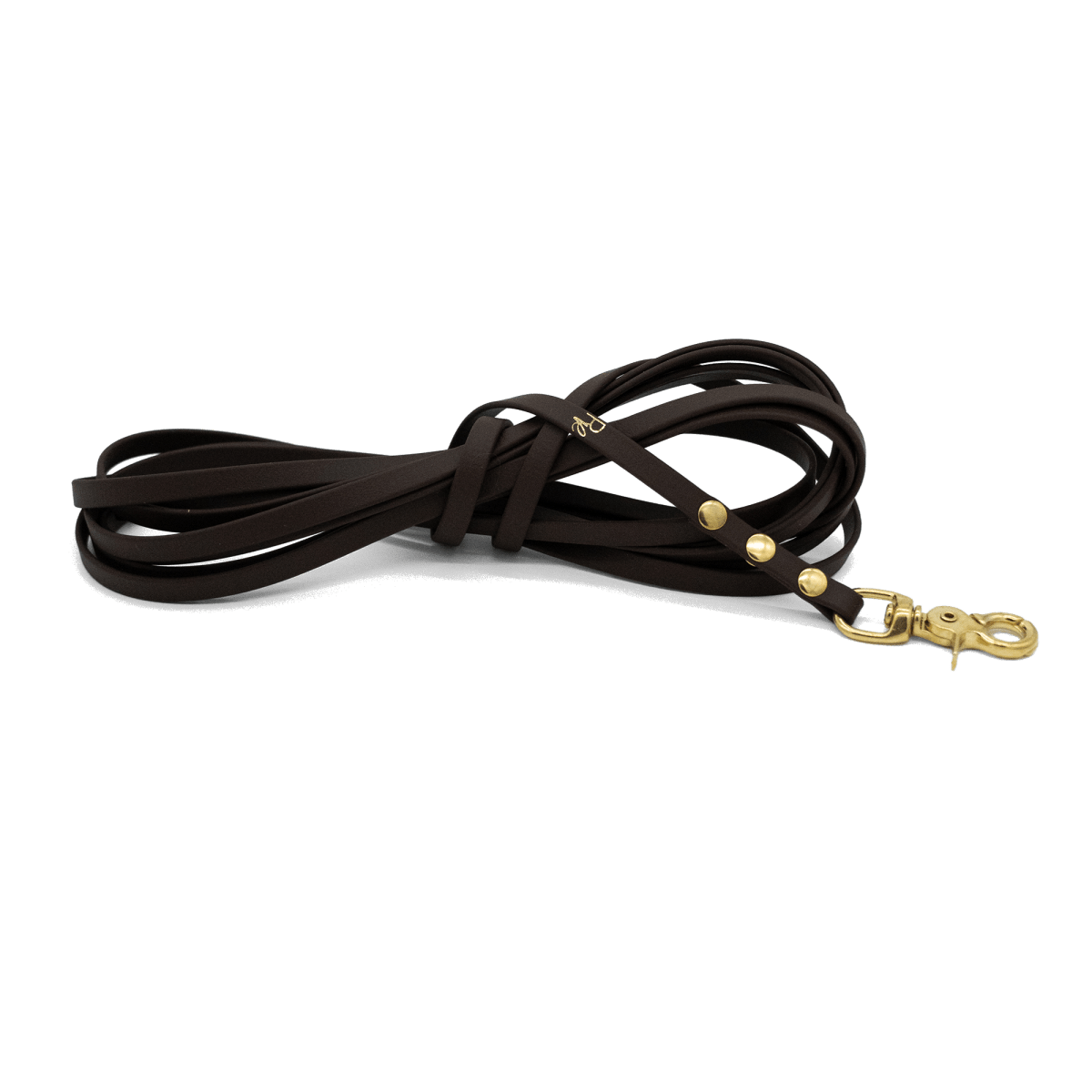
Long Line
Biothane, 1–6 m
- For off-leash training
- Practice recall safely
- Waterproof
All leashes are handcrafted in our small workshop by Julia – with tested brass hardware that withstands even a sudden pull.
FAQ — Dog Pulling on the Leash
How long until my dog stops pulling?
This is very individual. You often see first successes in a calm environment after 1–2 weeks. Until leash manners hold even with distraction, it usually takes 3–6 months of consistent training. With puppies it goes faster; with dogs that have a years-long pulling habit it takes a bit longer.
Does a harness help against pulling?
A harness distributes the pulling force better across the body and protects the neck – that's important for health. But: a harness doesn't teach your dog not to pull, only training does. Anti-pull harnesses can support the training but don't replace it.
Which leash is best if my dog pulls hard?
A fixed leash with a clearly defined length (1.5–2 m), grippy material and stable hardware. No retractable leash – it's permanently under tension and sabotages the training. Our rope retriever leashes or an adjustable Mix & Match leash are good options.
Are choke or prong collars a solution?
No. These aids work with pain, only suppress the symptom and can harm both dog and the dog-human relationship. They are legally problematic in many places. Rely on fair, consistent training and a well-fitting harness.
My puppy pulls — should I start training right away?
Yes, the earlier the better. With a puppy, no fixed pulling habits exist yet – leash manners can be built up positively from the start. Keep the sessions short (a few minutes) and playful.
What if the training just doesn't work?
If you see no progress after months of consistent training, or if the pulling is connected with aggression, fear or strong prey drive, get support from a good dog school. That's not a defeat, it's responsible.
Relaxed walks start with the right gear
Training takes time and patience – but the right leash makes the path there more pleasant. Every RudisRudel leash is handcrafted by Julia, with tested hardware and in your favorite color world. Become part of the pack ♡
Made with ♡ by RudisRudel · Quality control by Rudi